Friday, May 16, 2014

Moving out!

As my time here comes to an end (23 days!), I still had the opportunity to celebrate my students' graduation. This is the first time that I, as a teacher, have seen students that I taught graduate! I can't say that I believe they are ready for college and have the best knowledge of how to learn on their own, but graduated they did! 

In case you are interested in checking out my school's website, here it is: MAN MOJOAGUNG


I didn't even think about the fact that I'd be bombarded for photo requests on their special day. Unfortunately, I was pretty sweaty!

Nazil, one of my favorite students! She's the only one of 350 students who can have an actual conversation with me in English.

The girls of IPS2 (Erista, Ima, Sylvie, Ninik)

Dimas and I. 

Budi and Aditiya


The thrilled teachers (maybe an exaggeration!) Bu Nik and Bu Lilik
Recycled items fashion show
Firda and Riska from class X-1

Kindergarten coloring contest

Door prize tickes! Jazulie, Fandi and Gadit...how did you get so many tickets!?


Dina from IPS2, also a favorite student!


Class 12 is over high school! Their sign is a lot less awesome than their younger companions!
Umroh from Agama class, a super favorite student!
Nazil take 2

Nazil take 3

Bu Tatik and her daughter

Bu Umi, her son, Efi and her daughter

Pak Agus's boys!

Isa and Rori wow the crowd with their love song!

Nisa salims a teacher as he leaves. This is the way students greet and say goodbye to respected people, like teachers!

Thursday, May 1, 2014

I am the 0.00025%.


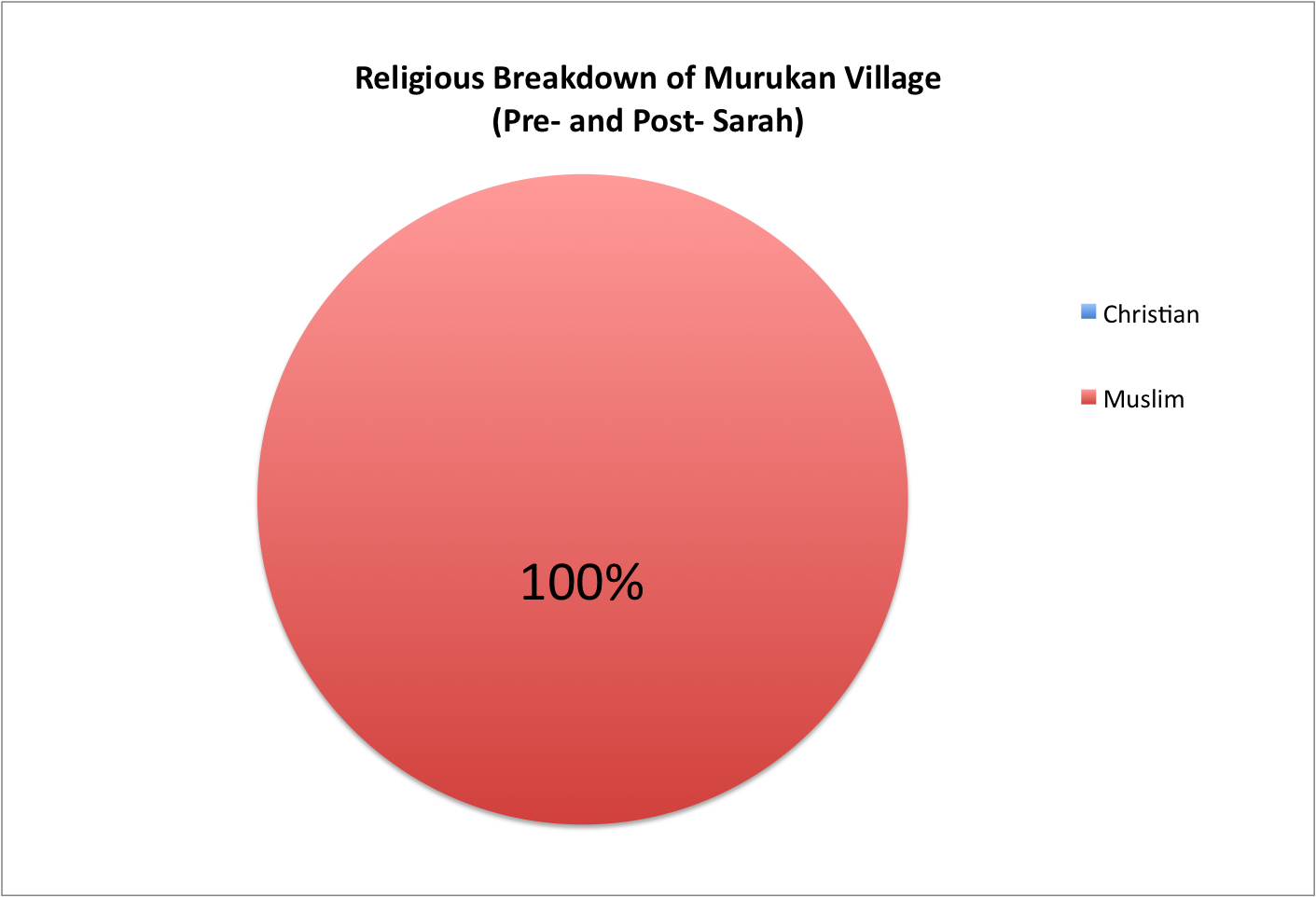
My village of 4,000 people is, to my knowledge, 100% Muslim. Enter yours truly, and the statistic changes:
99.99975% Muslim
0.00025% Christian

Where else can you swing the stats by that much?! That’s sorta cool! 


"Where's the blue?" my friend asked. Rightly so...

***

When I found out I’d be living in the predominantly Muslim country of Indonesia, I figured being one of a few Christians I’d mostly experience a personal struggle to understand God.

This is a long post that is more for me to think through my experience here. If you want the more exciting stuff, here’s a non-exhaustive collection of short blurbs on “Being Christian” in Indonesia. Then, my full story is below.

Being a Christian in my village means:
  • Biking 30 minutes one way to church.
  • Meticulously planning what I will wear, where I will shower (because 30 minutes at 3 PM = sweat), change my clothes, and be at church on time without being exhausted.
  • Not being able to go to church if it is raining.
  • Saying mass parts in English if I forget my translation book.
  • Wanting to laugh aloud at the word “selami” as it appears in a praise and worship song because I remember Julia Zwak. I still don’t know what it means, either. It’s not in my dictionary!
  • My host mom giving me elevator eyes after I get home from church wearing a knee-length skirt. “You work that to church?!”
  • No real prospects for husbands because everyone would want me to become Muslim. And because I don’t want to live here forever!
  • Avoiding at all costs talking about drinking or pork with people.
  • Explaining what pork tastes like.
  • Admitting that I don’t like beer (which is true) so that everyone will not think Christians/Westerners are all just big boozers.
  • Celebrating Christmas abroad with Debbie or Min Yao so as not to be sad and lonely in the village!
Debbie and I in Singapore, 2012
  
Min Yao and I in Malaysia, 2013

  • Having one of my best friends sheepishly hand me a gift and say, “This was meant to be for Christmas for you but I will give it to you for your birthday instead because my dad told me I am not allowed to give you anything for Christmas.”
  • Having teachers from my school who know me write on Facebook, “Don’t say Merry Christmas to anyone. Muslims are not allowed.”
  • On the flip side, being wished “Mary Chrismis” and “Happy Ester” on various occassions by Muslim friends.
  • Being one of the only young adults who does not fast all day for 40 days during Ramadhan (save menstruating women!)
  • Being extremely aware of the days in which I wear my cross necklace. Sometimes people ask what it is, but usually I just catch them looking at it.
  • Hiding in the school’s tiny bathroom eating granola bars during the fasting month.
  • Coming home with ashes on my forehead or a palm branch and having to try to briefly explain to my host family what that means with very limited vocabulary.
  • Amin. Amin. Amin!!!!!!!!!!
  • Attending a selamatan or a pengajian and being the only one not to enthusiastically say “Amin, amin, amin” during the prayer. You can’t “Amen” when you don’t know what someone is praying for!


Pre-Peace Corps 2011-2012:
At Carleton College, I had the privilege of being a part of a diverse group of Christians that challenged me at every turn. Post-graduation, however, I found that “real” life created extra challenges for faith.

What? No more 10-minute walk to the Chapel for Monday night worship? 

Some of the gang cir. 2011. The Trinity Pyramids instigated by yours truly.
à Post-graduation = a cold, 30 minute bike ride to church for contemporary choir practice. And then repeat that cold bike ride home in the dark. Then there and back again on Sunday for the actual mass!

What? There are not 10 close friends to call up and meet with at a moment’s notice?
à Turns out that living in your own apartment (or in my case renting a prof’s home) and having no car makes it a little harder to meet with a friend for a mini faith crisis. Not to mention most of my friend moved across the country. Sometimes a phone call just doesn’t do it!

I assumed that life in a 100% Muslim, Indonesian village would be somewhat like this. No one to immediately turn to and get advice about my Christian faith. Perhaps no church for 2 years! Ahhh (that’s an “oh my gosh, this is a travesty!” ahhh, not a “yes, no church for two years” ahh!) 

I romanticized the idea that I’d be in some tiny village for two years with no one but myself to rely on to become closer to God. I’d pray alone. Maybe sing with myself sometimes. Just struggle to come to terms with who I was as a Christian. Build my Christian identity around being different from the Muslims around me.

Thank the Lord that God knows me better than I know myself! Because being alone for 2 years would have been, let’s face it, a disaster. I’m a pretty darn social person who learns best from discussions with others. Left to my own terms I’d probably be farther from God than ever.

Pre-Service Training in Peace Corps:
For the first 10 weeks of Peace Corps, I was living with a Muslim host family that didn’t really seem very “Muslim.” By this, I mean that the women were running around in shorts, t-shirts, and no headscarves. The mosque was a distant idea; sometimes I heard the call to prayer. I didn’t hear much Arabic or Assalamm’ualaikum greetings wherever I went. I think this can be attributed to the fact that where I lived in Batu, Malang was a pretty bustling place. There are also a lot of Christians there, a fact I learned after moving away.

Julie and I in Lombok
Additionally, I met with a small group of other volunteers each day for language class, and I met with all 40+ volunteers each Friday for full-group training. Thus, my exposure to other Christians was not limited. However, I really only talked faith with Julie, another volunteer, on long bus rides!

As there was so much else going on during this time (essentially, I’d lay down for bed at 8:30 or 9 PM and crash), I didn't have a lot of pondering time, and faith took a back seat. The best piece of advice I got at this time was from a Christian in the Peace Corps group before mine. “Tell them in your final interview about site placements that you want to go to church.” So I did.

Peace Corps, Year One:
Fast forward (or rewind, really) to June 2012. DARN, that is almost 2 years ago! I arrive in my village. My new home for the next two years.

My host family takes me out on the town the second night I’m there (I’m using this term loosely, not really a rockin’ place!). Somewhere in the first 24 hours, I am asked about my religion. I tell them I am Christian. It is decided that during this night out on the town (aka eating with our hands on a tarp on the ground at the traditional market), we will swing by the two churches that they know of and see what time they hold services.

The first church appears to be in session. I read a sign that says 4 PM. It’s 6 PM and it’s still going, so I guess…they are very semangat? (spirited!) We check the other church that my host family knows. This one in Catholic. It’s at 5 PM on Saturday nights.

The next week I got a ride to the Catholic mass to check it out and I graciously welcomed. One, after mass about four people came up to me and started speaking English and invited me to a praise and worship night at their house. Two, I quickly realized that my language skills were not anywhere near me being ready to attend anything but a Catholic mass, as I knew what was happening when!

Without getting into a long story about how I’m essentially Protestant now, let’s just say that I attended Catholic Mass for the first year that I was here. I had full intentions to visit both churches and see which I liked better, but the Catholics got to me first!

The comforts of going to a familiar church service were good for me, as everything else in my life was changing. While I didn’t feel I was growing spiritually, really, at least I was still showing up for church.

Little by little I got more into the praise and worship service at Since and Agus’s house on Friday nights. Transportation proved a problem, so eventually I started sleeping at their house and leaving at 6 AM the next day to bike back to my village to teach. These Friday nights were a time to pray together, sing, and share. I came to understand how important language is for religion. 

PDKK with my Catholic friends


Side Note on Language:
The first person to bring to my attention the importance of a word was probably Ms. Schmidt, my senior year choir teacher in Sun Prairie. We were singing Mozart’s Requiem, and besides a lot of Latin, whenever we got to the word “blessed,” she was like “feel it, mean it!” Blessed is He whom comes in the name of the Lord. What does that mean to you?

In France, I went to a few church services (Catholic mass and Protestant Hillsong). It was perhaps one of the first times that I really related to God primarily through my heart rather than through thinking about words. The French words left my mouth were not words of which I necessarily knew the definition. However, I understood the feeling. I’d be singing a song and rather than brainlessly sing along, I felt the meaning.

In Indonesia, the same thing happens. I don’t know what I’m singing, let’s face it, probably half the time. But I feel the meaning. Even when I do know the translation, like below, the words mean different things to me in Indonesian than in English.

Kau selalu punya cara untuk menolongku
Kau selalu punya cara keajaibanMu
Kau dashyat dalam segala perbuatanMu
Dan ku tenang dalam caraMu. 

You always have a plan to help me.
You always have a miraculous way.
You are amazing in all of what You do.
And I am at peace in Your plan.

In English, I don't feel very special about “Your help.” But in Indonesians, “pertolonganMu” is way more powerful. I am “at peace” recalls the song “I’ve got peace like a river,” but it doesn’t have the same deep, gut feeling of “tenang.” In Indonesian, I feel these words, I don’t think them. It’s allowed me to consider how I feel about English words. What do I feel when I say “Hallelujah”? Glory? Honor? Worthy?

Some favorite Indonesian, church-related words that invoke feeling:
menyembah- to worship
memuji- to praise
menyelamatkan- to save (someone)
hendak- the will (of God)
setia- loyal
persembahkan- a sacrifice
kerinduan- desire, longing
mengampuni- to forgive
Engkau- you, but a more respectful word for “you” rather than “kamu” or “anda,” which are used in everyday speech

Firman Allah- The Word of God
Tuhan berkati- God bless you

Jetting off to Sydney:
Now we enter year 2 of Peace Corps, June 2013. I attended the Hillsong Conference in Sydney, Australia for a week and boy was that amazing! 

Imagine this. In college, I was never afraid to pray aloud with others. I was a leader of multiple things. Then I come to Indonesia where my language is like that of an elementary student. I simply didn’t (and really, still don’t) have the vocabulary to be able to pray the prayers I want. There was one disasterous time and the praise and worship that I was asked to pray for the food, and I straight up stopped in the middle of the prayer and said “Amen!” because I was so confused with the grammar. Never again have I prayed aloud after that! 


Being silenced in that way is really hard for me, and one reason that I don’t want to live here forever. The lack of language ability to really explain my faith and express it is just not here. I’m sure it’d get better in time, but I don’t want to have to strain my brain to understand what someone is even saying. Faith is already confusing enough in one’s mother tongue!

Looking out over Sydney
Okay, so the Hillsong Conference was a great break from translating everything at church to just being able to talk with others, sing, and listen to speeches in English. It was, in short, a saving grace and a perfect way to spend my mid-Peace Corps service. 

Finally, humor in my language! Gotta love it!
Peace Corps, Year 2:
Back in Indonesia, I decided I needed a change. I checked out the Pentecostal church in town. It’s the only other church available in my area (the other 2 are in the Javanese language). It has taken some getting used to, but all in all I love this church. It’s a two- hour marathon, including one straight hour of a sermon in Indonesian, so I have to be ready to listen. Can’t be sleepy; if I am, it’s better just not to go! On the good days, when the male pastor speaks and has handouts, I can easily find the readings in my English Bible and more or less keep up with what he is saying. At least…75% of it! 

This is mostly how I feel after attending church in Indonesia: exhausted!

I continue to go to the Catholic praise and worship nights when I can, and I attended Catholic mass for Ash Wednesday, Palm Sunday and Good Friday because the Pentecostal church didn’t celebrate these days with anything special.

Final Reflections:
Q: Did you learn anything about yourself through this?
A: Yes. I don’t grow very much in my faith when I am alone. I rely on community and discussions with close friends to help me grow in my understanding of my faith.

Q: When did you most often think of God?
A: Every time I am almost hit by a motorcycle or car whizzing by, I really do say aloud, “Thank you God!” (for protecting me, that is!)

Q: Can you pray in Indonesian?
A: It’s mediocre. Here, let me try.
Selamat malam Allah yang di surga. Aku syukur kepada Engkau bahwa Engkau menemaniku setiap hari di manapun aku berada. Engkau lebih setia daripada semua orang, lebih sabar, lebih penuh kasih daripada aku bisa mengerti. Aku mohon kepadaMu, Tuhan, untuk membuatkan aku sesorang lebih sabar, lebih rendah hati, lebih baik lagi Tuhan, biar orang orang lain melihat kuasaMu dalam hidupku. Amin.

Q: Did Skype help you stay connected with Christian friends back home?
A: Brooke and Wookie’s conversations on faith saved me in the hardest of times!

Q: Did you learn anything about being Christian in light of living with Muslims?
A: So much, that’s the next blog post! 


Wednesday, March 12, 2014

Relentless Pursuit Stateside

Hey friends, family, and other readers,

Great news to share! I accepted a position with "I Have A Dream" Foundation in Boulder, CO. Beginning in August 2014, I will be tutoring/mentoring/supervising 8th-12th graders each day for their after school college prep program.

That's even my new boss in the background! 


Wish me luck! Thank you for your continued prayers and support in my last 100 days in the beautiful yet frequently frustrating country of Indonesia.

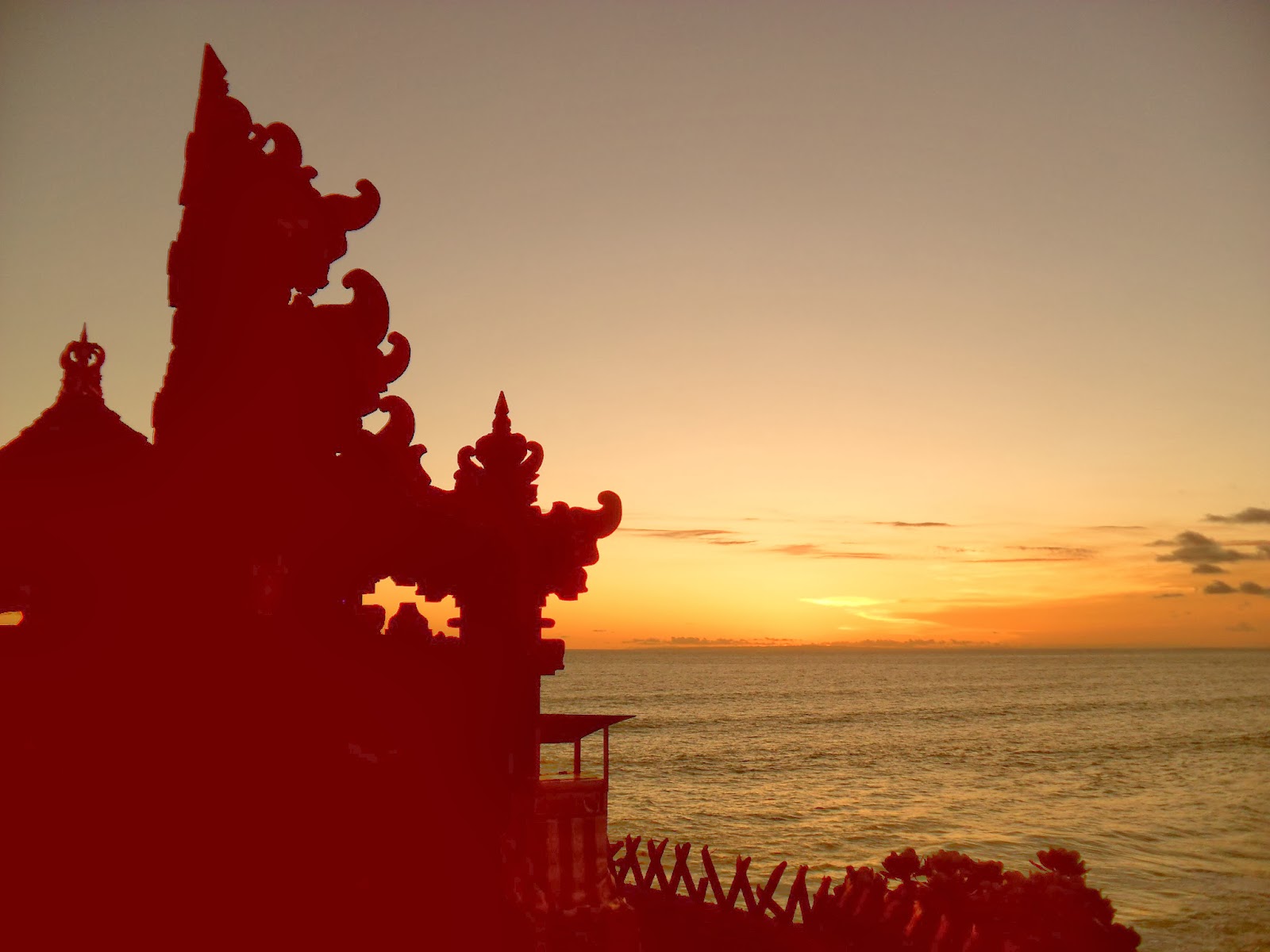
Sunset over Tanah Lot temple in Bali


As the time gets closer, I get more and more excited to come home. However, the reality that I will leave behind Faik, Lilik, Nurul and other close friends is quickly setting in.

Faik (back) and Lilik, my two closest friends in Indonesia. 


Fortunately, Faik and Lilik have already prepped a Whatsapp account to continue to sms for free when I'm in the US!


In the next 2 weeks, please keep my friends and I in your prayers as we prepare for a 3 day girls' leadership camp. IGLOW is an international endeavor by PCVs to prepare our girls for the future. Many of you donated last year, but this year we are trying to find all local funding. The camp is in 16 days and so far we have about 1/10 of the funding we need, yikes!


Friday, February 14, 2014

Gunung Kelud

Gunung Kelud (Kelud Mountain) is an active volcano 70 km from my village. 

This is a map of East Java. I live at "A," and Kelud is "B." 

The picture below is Kelud in 2007, a view of the inside of the crater (it's a lake).
2007, pre-eruption

But in 2007, the volcano started to erupt, and a lava dome (120 meters tall) grew up in the middle of the lake. It never spewed lava, however, it sorta "failed" as my friend said. Thus, the lake dried up and a little mountain formed in the middle, "Anak Kelud" (child of Kelud). I first knew about and visited Kelud in December 2013. This is what it looked like then:

December 2013


Fast forward to one week ago, when Peace Corps alerted us that Kelud was dangerous and we could not go near it. This was a picture my friend sent: 

February 2014


The pressure and heat continued and yesterday at 11 PM, the volcano erupted.  
February 13th, 2014

Because it is Anak Kelud that is erupting, the lava flow is contained inside the larger crater. Rocks were thrown into the air, however, and the ashfall is all over Java, blow west in the wind.

I was in Batu, Malang, 35 km from the volcano when it erupted. This is a picture of the villa ID6 was at, for our last PC conference:
Jambu Luwuk Villas where we were when Kelud erupted. February 13th, 2014


When I woke up this morning, this is what that same villa looked like:
February 14th, 2014
February 14th, 2014

It looks like a light dusting of snow on a cloudy day! The air was not bad, though PC gave us masks. We moved down into the town of Malang (45 minutes away), where there is no ash and the air is fine. I'll be out of my village until PC clears me to go back to site, which will likely be Sunday or Monday. I figure my village doesn't have much of anything going on, as no one posted anything super dramatic about it on Facebook and my school appeared to be in session. It was a similar cloudy day there, and I received texts like this: "Di sini hujan debu/abu Miss!" (There is ash/dust rain here!)

All in all, an interesting experience for those of us being safely watched by Peace Corps. Yet for those whose homes are full of dust and who are experiencing trouble breathing from the ash, not so awesome. Two Indonesians have died from the weight of ash on their houses. Thankfully, those are the only casualties so far. 


Wednesday, February 5, 2014

The One Where I Judge

Stop judging, that you may not be judged. For as you judge, so will you be judged, and the measure with which you measure will be measured out to you. Why do you notice the splinter in your brother’s eye, but do not perceive the wooden beams in your own eye? (Matt 7:1-3)


Introduction

For months, I have kept thinking about this comment that another PC volunteer made. He/she said that Indonesia has a great interpretation of Islam going on, because they made Islam their own. They don’t try to copy exactly what Saudi Arabia does, and they interpret things here differently.

Generally speaking, I’d have to say the Indonesian (or at the very least, the East Javanese) Muslims interpret Islam liberally. Here in Java, Islam has been mixed for so long with Javanese culture (since the 1400s) that often my question, “Is this a Muslim or Javanese tradition?” results in the person screwing up his/her face to think about that.

One example of the liberality of Islam in Indonesia is the hijab. The US Consul General, Joaquin (who, side note, is as cool of a ConGen as one is ever going to find!), believes that just in the last few years Indonesian women have began consistently wearing hijabs. When he was ConGen here just over 10 years ago, he said hardly anyone wore one. Now, women do everywhere I go. I have never seen and will never see the hair of over 75% of women I know and over 90% of my students.

 The evidence of Islam liberality can also be seen in the clothing women wear. Some women (children through 40-year-olds) wear skin-tight skinny jeans, regular old long-sleeved shirts (some of which are very form-fitting), flashy high heels and finally, a hijab. This is in comparison to some Middle Eastern women’s legal obligation (or perhaps heavy social pressure to adhere to tradition) to never show a square inch of skin in public. In Saudi Arabia, for example, "Muslim women in public are required to wear the full-body abaya, generally black, and the niqab, a black headpiece which covers the entire face and head, leaving only a slit for eyes." (USA Today)

Perplexing Fact

The most perplexing thing about this liberality, however, is my reaction to it. As a liberal Christian, I should be jumping for joy that Indonesians own their Islam and do not feel too restricted. Instead, I find myself looking for ways to criticize people for being “less Muslim” than, for example, Muslims in the Middle East. There is no rational explanation for why I do this, as theoretically I prefer to see Muslim women wearing whatever they want instead of making them wear gloves to hide their apparently too-sexy hands in 120oF heat. Christians are free to wear whatever they want, and I believe Muslim women should be in charge of their bodies, too. Yet here I am, confused about my own judgmental reaction to the women who dress in those skinny jeans and gobs of make-up.


Self-Awareness

Before I share some of the things I find myself confused about, I want to state clearly here that I am 100% aware of my irrational, uncalled for, and unfair judgment. I’m not hiding the fact that I am judging, lest anyone try to peg me for being, I don’t know, a hypocrite? I'm not proud that this is what I am doing, but I am being honest about my thoughts. I believe thinking through my ideas allows me to see the positives and negatives (in this case pretty much all negatives) of an idea and adjust accordingly.  Why share this with you on this public blog? I am simply being honest. I am not trying to get you to start judging Muslim Indonesians, too. That would be to opposite of my goal.


Confusing Observations

I find myself judging women for being “less Muslim” when they wear tight jeans and tons of make-up. Isn’t modesty one reason for the hijab? Yet here they are, piling on make-up to look cute and attract men’s attention.

I find myself judging my host family members when I know that they don’t pray subuh before the sun rises.

I don’t understand my school’s policy that girls must wear a hijab to cover their hair, yet when they wudhu (ablutions for praying) the boys see their hair anyways.

I don’t understand why “it is better” if women wear long skirts but it’s no problem when the skirt is hiked up to their knees while they are riding a motorcycle.

Mostly, these things relate to women’s dress. I guess this is because clothing is the main characteristic that distinguishes a Muslim from someone else here. Many Muslim women always wear long sleeves and long pants while many Christian women wear knee-length skirts and t-shirts. But then most of these covered Muslim women go home and put on ratty old pajamas (often T-shirts or nightgowns that fall to the knee). The dichotomy is too much to handle!

My Excuse

So I’m judging. I guess the best excuse I can give is that I find satisfaction in finding faults in the people who spend so much time telling me what “good” Muslims are like and how they are “good” Muslims, not like those other Muslims who aren’t practicing. The comment about them being “good Muslims” is then, of course, followed by a humble (though perhaps not heartfelt) declaration that only Allah really knows. Of COURSE we want to be the better ones, the “good” ones, that’s what it means to be imperfect humans. We desire to be the “best.” If Muslim people really pass no judgment and have neutral opinions about the non-practicing Muslims, then I’ll be darned. And teach me how to think like that, please! 

Turning it Around

So, it finally occurred to me this week to turn this judging back around on myself. What do I do that makes me a “worse” Christian? One surely can’t run around judging others without then judging oneself in the same manner!

My first reflection was that Muslims simply have too many rules. Rules about how to wudhu for praying. Rules about how to sit when praying. Rules about how to kill a chicken. Seemingly endless rules about women and menstruation. Rules about eating. Rules about drinking. Rules about touching certain animals. Rules about how many times one must wudhu after touching the forbidden animal. Etc….

So when I consider what I do that makes me “less” Christian, I have to consider that generally speaking, Christians don’t have very many “don’t do this” and “you must do this” rules. The 10 Commandments are the only concrete rules that come to mind. Jews are still bound by the Old Covenant. Jews could give Muslim rules a run for their money on who has to follow the most rules. Leviticus alone has over 200 rules. Anyhow, this lack of “do this” and “don’t do this” in Christianity allows for a more open interpretation of what is “good” and what is “bad.” Turns out, I do a lot of stuff that I’ve decided makes me a “less awesome” Christian.

·      I walk right past beggars and other people in need.
o   “Lord, when did we see you hungry and feed you, or thirsty and give you drink? …The king will say to them in reply, “Amen I say to you, whatever you did for one of these least brothers of mine, you did for me.” (Matt 25:37,40)
·      I do not consistently tithe 10% of what I earn.
·      I assume that everything I have to say is important.
·      I don’t go to church every Sunday.
·      I rarely pray.
·      I attend church but don’t pay attention to the sermon.
·      I am often angry with my students and say mean things.
·      I am not thankful enough for everything I have been given.
·      I do not have as much reverence for God as I believe I should.
·      I gossip about my host mom a lot.
·      I always demand things from the school office and don’t show gratitude.
·      I dress for clubs in a way that the media has taught me, aka to objectify myself.
·      I don’t regularly read the Bible.
·      I think I’m a “better” Christian than those who say they are Christian but in no way seem to live out their faith. (Isn’t this ironic, just like how I judged Muslims for saying the same thing about non-practicing Muslims…)

And so on and so forth…

The Improvements

Fortunately, this week I did attend church and I did listen to the sermon. The pastor was preaching about leaving behind the sins of 2013 and becoming new in 2014. (I'm surprised that I understood even just a little of what she was saying because this lady speaks lightening fast with a lot of emotion.)

So whoever is in Christ is a new creation: the old things have passes away; behold, new things have come. (2 Cor 5:17)

…You should put away the old self of your former way of life, corrupted though deceitful desires, and be renewed in the spirit of your minds, and put on the new self, created in God’s way in righteousness and holiness of truth. (Eph 2:22-24)

In order to be come this better person:

…Everyone should be quick to hear, slow to speak, slow to wrath, for the wrath of man does not accomplish the righteousness of God. (James 1:19-20)

Well jeeze, I hear “be quick to hear, slow to speak” all the time, but when you add on that this “DOES NOT ACCOMPLISH the righteousness of God,” that really hits home for me.

We ought not to curse others (i.e. judge Muslim Indonesian friends)

With [our tongues] we bless the Lord, and with it we curse human beings who are made in the likeness of God. (James 3:9)

Let your speech always be gracious (Col 4:5)


Well, talk about feeling like a jerk. On Saturday, I just finished a humorous speech to Carrie (via Skype, I didn’t go to Honduras) about how I just don’t care anymore. I don’t care if people think my opinions about corruption and cheating are too extreme or that I am outspoken. I don’t care if my students cheat. I don’t care if someone calls me fat. Etc.

However, the scripture tells me to be slow to anger. And to care about others. My message of “I don’t care” has no regard for how it makes others feel. While I repeat, “I don’t care” so I don’t get mad, making others feel bad in the process is not constructive. It’s probably better for me to be angry alone that it is for me to hurt others as I try to avoid anger.

Thus, this week I’m really going to work on kindness toward others. I have to respect that my values are not the same as most teachers here. My endless gossip needs to end. Build up others, don’t put them down.  I have to learn to hold my tongue. I must pray that God would immediately relieve me of my anger. I must withhold verbal and mental judgment of others.

Julia just sent me this great article, too. Written by a Christian woman, it calls into questions what we really do when we say something offensive or judgmental to someone, and then tack on the words, "Oh, just kidding!" 

Watch carefully then how you live, not as foolish persons but as wise (Eph 5:15)

And once again:

Stop judging, that you may not be judged. For as you judge, so will you be judged, and the measure with which you measure will be measured out to you. Why do you notice the splinter in your brother’s eye, but do not perceive the wooden beams in your own eye? (Matt 7:1-3)