Thursday, March 21, 2013

A Whack on the Head: Reflections on the "Bule Price"


My fellow PCV Joe is a very reflective young man (see his blog here: Joe's Blog) who makes us think, and for that I am very grateful. Last month, he wrote about why we should pay "Bule Prices" aka "foreigner prices." When I came across this passage in a book, I shared it with Joe, along with my own reflections.


Indonesian Rupiah. Picture credit: PCV Maurice

...

Playing with Fire: Adventures Indonesia, travelogue by Nick Langston-Able (British guy, book published in 2007)

“Squabbling over 10 pence is one of those travelling cliches that is difficult to understand until you’ve been in the situation. In some cases, it can be the traveler simply being tight but I think that generally it is the acknowledgement of the value of money in the country you are in and an awareness of the relative prices of things.

For example, paying an untrained guide more money in a day than a policeman may get paid in a week only helps encourage more untrained people to become guides, and corruption in the police force. Any tourist who thinks that they should pay local people extra money because they can afford it should think more about the effects on the local economy and the view that this gives of Westerners.”

...

My letter to Joe: 

I have been in a couple various situations in which your blog post about paying the bule price has wandered into my mind.

Last week, I was going from TP mall in Surabaya to the terminal. I decided to splurge and take a taxi, assuming it’d be around 50k. At rush hour. In the rain. The taxi driver suggested taking the longer but faster, less traffic-y way. Vaguely knowing the outlay of Surabaya, I agreed. Lots of traffic and over an hour later, we finally arrived. I was foaming at the mouth that it took so long and the bill was 85k, way more than I wanted so spend. After 45 minutes in the taxi, I’d asked him if the traffic was usually like this, he said no. Originally, I wanted to trust him; eventually, I was furious, assuming he knew the situation would pan out like this. Did he see that I was white and just want more money out of me?

I tried deep breathing and putting it into perspective. $8.50. I could absolutely pay that. And this is Surabaya, in rush hour. And tons of rain. But still!! I tried to think about the fact that yeah, I could afford it. I am a Westerner. But I was also a little hurt to feel as though I was being taken advantage of. People see white skin and make so many assumptions. (Though upon further reflection, I make countless assumptions about Indonesians every day).

Well wouldn’t you believe it, as I got out of the taxi after angrily thrusting the money at the driver, he apologized. He said truly, the traffic usually is not like that. I gave a curt nod and got the heck out of there. But all the blood was rushing to my head and I couldn’t believe how “kurang ajar” I’d been. Here I am, in the midst of Lent and reading the Bible (almost) every day. Trying to be a better person. What happened to “Give freely and expect nothing in return?” ("Lend, expect nothing in return" Luke 6:35). And this was how I’d treated someone. I’d just gotten a good smack in the head and heart from God.

As if this wasn’t enough, then I wanted to board a bus, but it was pouring rain. A bunch of young boys were running back and forth in the rain with umbrellas, shepherding people to the buses for a quick buck. Though I was already an hour later leaving Surabaya than I’d planned, I refused to pay for a 25-meter walk under an umbrella that I’d have to pay for. I watched person after person take the boys up on their offer. A terminal guard came by and literally, literally kicked a boy for trying to enter the terminal. Basically he shoved them out into the rain, as if to say, “Wait there, street rats. Don’t enter my terminal.” I was shocked at this lack of recognition that they are human, for gosh sakes.

While I still didn’t want to cough up the money, I got to thinking, really, was it so bad that these middle school/high school-aged boys were taking advantage of the weather and travelers to make a quick buck? Isn’t that how capitalism works? Finding (or creating) a need and meeting the demand…

After waiting 15 minutes and the rain’s relentless downfall, I finally asked an approaching woman if she could check the umbrella price for me. Perhaps we could share an umbrella, I suggested. I didn’t want to pay the bule price. She checked with a boy and then waved me over. We crossed together and as I went to pull out seribu or two, she shooed away my money and handed the boy a 10,000 Rp note, along with a  pinch on the cheek, as if to say, “Take care of  yourself.”

Well, for the second time in ½ hour, God smacked me again and was like, “Quit being so stingy. What didn’t I give for you?? And you won’t give a dollar?” I felt so ashamed.

I’m still figuring all these racial and cultural experiences out, but I guess I’m trying to more deeply consider how my physical difference as a white American shapes my Indonesian experience. I think my desire to blend in is always at the forefront of my mind, but I’m ever so slowly realizing that I simply never will.


…

As for the excerpt above, what are your thoughts, Joe? I definitely sympathize with the author's idea that we recognize  “the value of money in the country [we] are in and [have] an awareness of the relative prices of things.” I’m a human who doesn’t want to be treated differently just because of what I look like, and I tend to believe that I should not have to pay more.

On the other hand, I can afford more.

Joe's response: "So it is hard for us, especially coming from a culture where virtually everything is fixed price. I think that's a large part of what offends us here, we just aren't used to arbitrary pricing. It's funny though, our take on the morality of it. We think charging us a little extra is immoral, but is it moral that our stomachs are guaranteed to be full each night and theirs aren't? Can I really be offended that some poor guy charges me a little extra so he can feed his family? It's not like the people who "take advantage of us" (not your words) are doing so in order to buy massage chairs or jet skis. These are people who are scraping by, and our extra money will enable them to buy some meat for dinner or purchase school supplies for their kid.

"Then obviously, being white foreigners puts a massive target on our backs. I've found in my village nobody overprices me, which brings me to my next point. I think for PCV's it's hard because we aren't just tourists, we are largely living at the local level. My village sees this, so they charge me the same as others. But a becak driver in Sbya doesn't know my story, so he will overcharge me assuming that I'm making an American wage.

"I try to look at it a couple other ways too. 1) Like you mentioned, it's really not all that much money to us as Americans. I've wasted a lot more money on god knows what. 2) Like you also mentioned, back in the States you'd pay far more for a cab ride than you do here. Sure gas might be a little higher priced at home, but other than that you pay drastically less here for the same service. It's really not fair, especially when you consider how many important things are globally priced and not locally priced (like electronics, airfare, etc.) " 

...

Back to me!

I guess that this is like rich Americans not wanting to be taxed a larger percentage of their income simply because they are rich; that’s called “progressive taxing,” right? Usually in response to that, I would counter that a lot of rich people aren’t necessarily physically working harder or longer hours than a poor person to get their money, so really it’s not fair they have more money. Make them pay more! But putting that idea into the Indonesian context forces to reflect on my own privilege; why should I as a white American have more money than an Indonesian? Do I really work harder and longer? Why do I “deserve” more? Or don't I? Why shouldn’t I pay more?

As for the author’s idea that the policeman makes less money than the guide, that seems to point to capitalism again. It’s not really fair, it’s a system based on some skill, luck, marketing…at the end of the day, should a policeman be paid more and why? I’d probably have to argue that they are trained, they are there to help people at a moment’s notice, etc.

But a guide is also knowledgeable about his/her trade, isn’t he/she? Perhaps she/he couldn’t afford a fancy school for a diploma/certificate like the policeman, but the guide was making the best of his/her situation and sought out knowledge about something. They certainly have marketing skills. English skills. They are friendly…why should this service be devalued simply because they didn’t have enough money for higher education (or simply didn’t want to go to the university because they were smart and saw they could make just as much money doing something that didn’t require a diploma.)

Courtesy of google images


Makes me think about American higher education. Only the rich or the smartest can afford it, even though there are so many more people who would benefit from and want to attend college. Shouldn’t education be free and accessible to all? I’d love to see college prices drastically decrease in the US, but again, capitalism prevents that…the rich go to great schools, get better jobs, and get richer.

A final note, I do not in any way deny how much I have benefitted from capitalism. 

Wednesday, March 13, 2013

2 nights on a bus and 2 tourist stops

The first and only other "study tour" I have been on was in 2003 when I was 14 years old. Sheesh, I'm getting old!

This year, I "slept" for 2 nights on a bus with 100 11th grade Indonesian students, most of whom had never been to the beach before...and they live on an ISLAND!


Qilmi, me, Adlan and Pak Lutfi psyched to be at the beach!

Dilla was one brave soul, the first in the water, and one of the last out! 

Hakim and I

One day when Hakim is famous, I told him to use this as his CD cover...I"m not sure if he even actually plays the guitar or if he was just borrowing it from Puthot...

Nazil, easily one of the best English students!

Beach Bum Boys!

The ocean!!!

Puthot and Okta!
Only in Indonesia would my students be buying knife souvenirs...oh Azim! 

We were going to go to this university for a tour, but when we arrived 2 hours late, the person who would be our tour guide had understandably left...


So then we took pictures for like 1.5 hours while we waited for the student who was left behind at the beach...turns out, he didn't catch up with us until later in the evening. So we missed the trip to the factory too...


About 3/5 of the group...the teachers had a notable lack of interest in trying to round up everyone to take a group shot!

Miss Sarah and the boys...I reminded them again and again that when they uploaded these pictures to Facebook, I was their TEACHER, not their white girlfriend from America!!!
Teaching the students frisbee!


After leaving the beach at 9 AM, waiting at the university for the student that never came, and dealing with traffic, we finally arrived at Borobudur at 2:30 PM. Yay Indonesian scheduling!
The HUGE Hindu Temple, Borobudur. 


Nazil and Yuni

Missing Buddha head becomes Okta's head!

Buddha gazes over the horizon

LOOK AT THIS SUNSET! Amazing!
Tshirts at the market


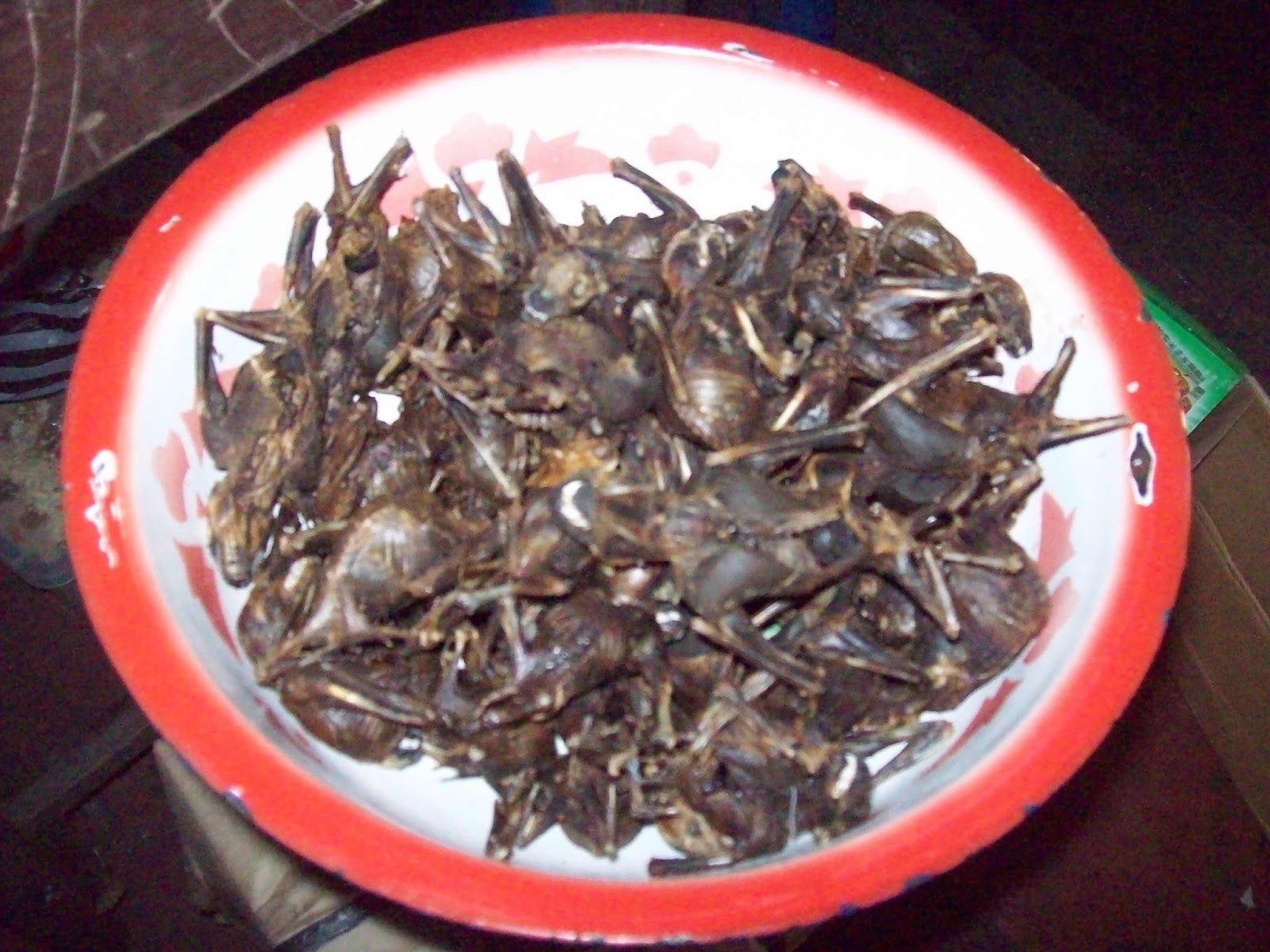
Bats! Apparently not just Togolese cuisine!

Lia and Nyla bargaining for their batiks

Oh, sunburn!

Pak Lutfe, what a bro! Pictures with Syamsul, Niya and Fiki

Some random costume-clad people...that white one is the Indonesian Muslim version of a ghost because that is how they wrap up the body to bury it.

Thursday, March 7, 2013

Islamic Hegemony


It occurred to me this week the extent to which I live in a state of Islamic Hegemony. Hegemony (thanks, Anthropological Thought and Theory!) is dominance of one social group’s ideas/culture/customs over other social groups. It’s not inherently negative or intentional, though I’d venture to say that the effects on the non-dominant group could be anger, stress, or feelings of oppression.

I didn’t realize how much American society is controlled and affected by Christian hegemony until I was in the presence of a room full of atheists and Jewish people talk about it (this was at an antiracism conference in 2009). I was shocked by the sheer amount of things that they have to deal with as non-Christians in our country. Consider the hegemony that is perpetuated in this “stand-if” activity. In the “stand-if” activity, each question is followed by asking people to remain standing if they are non-Christian while the Christians sit down, so as to see how many people are still affected by these statements even when they do not follow the Christian religion.

Stand if…

1.     You have ever experienced the church in your community as a major center of social life that influences those around you and that would be difficult to avoid if you wanted to.
2.     You have ever taken Christian holidays, such as Christmas or Easter, off, whether you observe them as Christian holidays or not, or have taken Sunday off or think of it, in any way, as a day of rest
3.     You have ever been given a school vacation or paid holiday related to Christmas or Easter when school vacations or paid holidays for non-Christian religious celebrations, such as Ramadan or the Jewish High Holidays, were not observed.
4.     Public institutions you use, such as offices, buildings, banks, parking meters, the post office, libraries, and stores, are open on Fridays and Saturdays but closed on Sundays
5.     The calendar year you observe is calculated from the year designated as the birth of Christ.
6.     You daily use currency that includes Christian words or symbols, such as the phrase “in God we trust.”
7.     You have ever attended public nonreligious functions, such as civic or governmental meetings, that were convened with Christian blessings, references, or prayer.
8.     You have ever been asked or commanded to sing or to recite, in public, material that contains Christian references, such as the Pledge of Allegiance or “America, the Beautiful.”


Here in Indonesia, at the very least in East Java, the hegemony table is turned. It’s all about Islam all the time. I preface these examples by specifying that these statements are about East Java because religious hegemony tends to be by island in Indonesia. So Bali has Hindu hegemony; Flores has Catholic hegemony… There are also pockets of religious minority communities within provinces. When I visited Lake Toba in Sumatra, I was with Batak people, who were Christians. Alcohol flowed freely and there was NO mosque in the town I was in, which is extraordinary for a girl used to a musholla (small mosque) literally on every 2-3 blocks.


Both of these charts come from: "Penduduk Menurut Wilayah dan Agama yang Dianut [Population by Region and Religion]". Sensus Penduduk 2010. Jakarta, Indonesia: Badan Pusat Statistik. 15 May 2010. Retrieved 20 Nov 2011.


Anyways, here are some examples of the Islamic hegemony I see in East Java:

1.     Five times a day- rain or shine- the entire province fills with the sound of the call to prayer on the loudspeaker. Emphasize loud.
2.     It is hard/impossible to find pork anywhere except in big cities.
3.     Women may be uncomfortable wearing shorts/skirts above the knee or tank tops because they are showing too much skin.
4.     Many schools recite the Al Qur’an every day before school, using, of course, the loudspeaker. Students of other religions still have to come, but they just sit there.
5.     Signs of restaurants or businesses often use Arabic words.
6.     Meetings begin with “Assalamualaikum” (Peace be upon you) whether there are people of other faiths present or not. I have yet to discover if people of other faith say it at meetings or not.
7.     The left hand is considered dirty so you should not pass anything to anyone with your left hand, wave to anyone with your left hand, take anything from anyone with your left hand (unless you apologize), write with your left hand, etc.
8.     School is free for major Muslim holidays. While Christmas falls within the end-of-semester vacation, there is no time off, for example, for Easter or Chinese New Year, etc. As Judaism is not even a recognized religion, woe to those who want to celebrate Passover, Rosh Hashanah, Yom Kippur…
9.     TV programming sometimes has the call to prayer in the evenings during commercials.
10. A lot stops at 12 PM on Fridays, when the men are required to go to the mosque for Friday prayer, called Jum’atan. (Pronounced Jew-maht-on)
11.  “So can you do this homework?” “So can you meet me here?” “So will you marry her?” is all met with a simple, “Insha’Allah” (if God wills). Indonesian Muslims are either more faithful than Christians in leaving every decision to God, or they are less willing to commit to anything!
12. Men can often be seen wearing sarongs (skirt-like!) and kopiahs (small hats) anywhere and everywhere. Women of course, are wearing headscarves everywhere, too.
13. Every good public place has a musholla for when the time to pray comes: gas stations, zoos, airports, restaurants. Everywhere!

I’m sure there are countless more ways in which Islamic hegemony is manifest. However, most of it has become rather normal, so I don't always recognize the hegemony around me...


Awas! (Be careful!) If you aren't aware of what's going on around you, even you as a practicing Christian may end up following the Islamic hegemony! 

Monday, March 4, 2013

The month that drove me crazy but paid off with some sweet beats

For the last month, about 50 students have been out of class every day to practice for porseni, a district-wide competition including: volleyball, soccer, badminton, running, ping-pong, English/Arabic speech contest, Arabic recitation of Al Qur'an, chess, dancing (disguised under the name "gymnastics" but come on, let's call it what it is, a dance routine!), and my favorite, Al Banjarian. Unfortunately I can't say that being out of class every day for a month resulted in our school as overall champions (but huzzah, another reason to argue with my principal why it is not a good idea to pull students out of class every day and all day for a month!)

Viki (left) was second-place champion in chess. 
The volleyball boys, our first-place champions and not surprisingly some of the few students who are taller than me! (Well, that's a bit of an exaggeration...but not by much) 
My buddy, Mas Karel, displaying a trophy from porseni. 

Anyways, Al Banjarian. Let's just say that Miss Sarah has become the students' #1 Fan of Al Banjarian. Al Banjarian is a form of Arabic music that is made of a group of about 10 musicians, 5-6 of whom play drums (one bass drum) and 4-5 of whom are singers (each song usually has a lead singer and the rest are back up). 

I'm sad to say that I have no good recording of my students playing (hmm, perhaps a new camera can find its way into Mom and Dad's luggage in May??!), but the following recording from youtube is really clear and very accurate:

Al Banjarian: The filming of this event (I have no idea where, just a random video clip from youtube) is very accurate: people randoming walking around, talking, aka not necessarily focused on the music. As in this clip, the musicians are always seated on the floor. 

Viki and Luluk, 2 of the 4 drummers.
Thyta (r) and Umroh, 2 of the 5 singers. Umroh is the lead singer with the voice of an angel! Aren't my students beautiful?!?

Cowoks (pronounced "Cho-woah") (The boys)

So last night at 5 PM, I was spur-of-the-moment invited to go to the music festival in Jombang City. I was warned we'd get home late, like midnight, so I was ready. I threw on my Muslim dress (aka long to the floor and long-sleeved), grabbed lots of snacks, a book, and headache drugs for what would inevitably be a long night of great music but loud speakers! **As it would happen, didn't need the drugs, thank gosh!

Anyways, I arrived at school, fended off suggestions for Miss Sarah to ride in the back of the pick-up truck with the students, and was ready to go!

Then the torrential downpour and thunderstorm arrived. As fast as you could blink. The screaming girls jumped out of the back of the truck and ran inside. And thus the waiting began. The worst part was, my preparation pack (food and book) were in the front of the car, in the pouring rain, so I had nothing to do!

My friend Karel (school's security guard and resident driver) decided that he'd rig up a cover for the back of the truck. In true Indonesian fashion, he walked around the school grounds in the pouring rain, found some scaffolding that men were using to build the musholla (small mosque) at the school, and popped it up on the back of the truck.

1+ hours later the structure was completed, the rain had slowed to a sprinkle and we'd missed our time to play (which meant we were added on at the END of the night). But my students were still ready to go! Despite me being the only person concerned about the safety of this entire operation, approximately 15 students hopped in the back of a normal-sized pick up truck and we were off.

If this was not a time to begin a car ride with a prayer, "Bismillahirohmanirohim" (in the name of God most gracious and most compassionate...), I don't know when the right time is.

Excuse the politically incorrect way this is phrased, but here is a truck full of my illegal immigrant-esque students! 

My rockstar students performing at 11:30 PM on a school night. The girls played shortly after, at about midnight. 

We arrived home at 1:30 AM after an exciting night of lots of great music. We didn't win the competition by any means (there were 70 groups, the judges had been sitting there for at least 12 hours, and my students were at the very end of the night when everyone was exhausted), but we were happy!

...

This night was marked by my contentedness at being part of the "young" crew. Most of my time here is either spent with adults who are in their 30s+ and married with children, or with students who are, gulp, on average 8 years younger than me. But last night, I hung with the young staff! Karel, Ifa, Riza, and I are the members of what I am calling the 20-something club. We are the only 4 unmarried and youngest people on staff. (Save 3 teachers in their 20s, but they are all married already, 2 with babies). 


Karel, 24 yrs old, security guard and resident driver!

Ifa, our library attendant, 20 yrs old

Riza, 24 yrs old and administrator

Me, rounding out our foursome and appropriating displaying how I look in half the pictures that are taken of me: shining white. The other half of the pictures? Crazy sweaty. 
So we were the chaperones of last night's adventure. When the students were waiting to perform, kita berempat (the four of us) went to get some late-night martabak (fried egg snack) and chat. Mostly about how the guys shouldn't smoke so much. 

...

A real conversation with Riza in the administrative office in front of a handful of male admin/teachers):

Riza: Miss Shara (that is how he pronounces my name), mengapa kamu tidak suka orang yang merokok? Why don't you like people who smoke?

Sarah: Begini Mas, sebenarnya saya masih suka orang yang merokok, tetapi saya pikir kalau merokok, sangat tidak bagus untuk kesehatan. I still like people who smoke, but I think that smoking is really bad for your health.

Riza: Yeah...nanti, gimana kalau pacarmu merokok? Yeah..what about later if your boyfriend smokes?

Sarah: Tidak mungkin! Saya tidak mungkin akan punya pacar yang merokok. Karena itu, kamu sudah gagal dengan saya. Maaf! No way! I will not have a boyfriend that smokes. Because of this, you have no chance of being my boyfriend, sorry! 

Riza and all the male teachers crack up at this. 

Karel (chiming in): Jadi saya harus berhenti merokok! So I have to stop smoking! 

Riza: Terus, kenapa tidak senang sama pacar yang merokok? Okay, so why wouldn't you be happy if your boyfriend smoked?

Sarah: Saya orang jujur, yeah? ...Nanti, siapa mau cium seseorang yang merokok? Itu seperti saya cium rokok aja. I'm an honest person, yeah? (my preface for what's about to come...) Who wants to kiss someone that smokes? It's like kissing a cigarette!

Riza, Karel, and all the men lose it at this point.

Riza: Yeah, kamu jujur sekali! Yes, you are very honest!


Sunday, February 17, 2013

Why work hard: Homework Edition

Remember my blog post from yesterday about how many students don't do work and still pass? 

Check this story out. 

Disclaimer: While it may appear that I am raving mad about this situation and yesterday's blog post, don't worry! I have long since thrown my hands in the air and, as Britteney says, SMH. (Every time she texts me that, I have to look up the darn meaning: SMK = Shake my head!) So things like this story don't bug me anymore. It just is what it is here. And since my focus is sustainability and I know that my CPs are not (yet) at the point of defying odds and giving 0s for lack of work, I just go along, giving all the extra time a student could ever need to finish an assignment. Oh man, am I becoming a the fatalistic Indonesian teacher??! 

So, in Indonesia, rarely do I give homework because: 
a. the students don't do it, or 
b. they just copy from one smart student...a smart student, who, btw, lets them copy- what the heck?!

Today I interviewed 2 students:
Q: "Why don't students here do homework? Is it just English homework that people don't do?"
A: "No, Miss, most of us do not do the homework for any of our classes."
Q: "Why not? Don't you have time to do it at home?" (Save helping mom and dad around the house or at a family business, Indonesian high schoolers don't have jobs.)
A: "Yeah, we have time. We are just lazy. We like to text, use the internet, and watch TV."

Stellar, students. As my CP says, "These are your students, Miss!" To which I, without fail, respond, "These are your students, too!" 

Last week I decided to risk it and give the following assignment. Here was the plan of action:

- Read a 5-paragraph story
- Draw 5 stick-figure pictures about the plot
- Write a one sentence summary. 
- Due in 4 days. 
- Work with a partner. (God forbid an Indonesian student work alone on anything.)

Enter me on Monday morning, 4 days after assigning this. I'm revived from my weekend rest and yesterday's blog rant. My first class is IPA, my "smartest" 11th grade class. "Smartest" because they are the science class (IPA), so according to Indonesian teachers they are more studious and diligent. In general, their attendance is legitimately better and their behavior calmer. As for their English grades, a little better than the social classes (IPS), but not extraordinarily better.

Anyways, imagine my delight when I learned 2 girls did the homework. 2/26. Awesome. This is their first assignment in 2 months (shall we revisit the reasons why they don't do homework? TV, texting, and internet)...

So really, my grade book should look like this: 

Check out those test scores (out of 25)!! One student studied for the test. I made 4 practice activities, biked 30 minutes to copy the worksheet for them, and gave it to them 2 days before the test to do. One student used the worksheet to prep. Anyways, case in point here is the assignment on the left. 2 students would have passed the assignment.  

But oh, dear reader! Don't forget yesterday's blog post! This is my Indonesian village! The land of second chances or free passes, take your pick. Instead of giving 0's, we gave them 45 minutes in class to try to finish. And guess what? Only about 75% of them finished even then. Sigh.

16.5 months to go.

Work hard? Why do that when you’ll pass anyway??

Whew. This blog post has been a long time coming, and I’m certain that all I want to say about it can’t even fit into one post. The cultural difference of Indonesian students' laziness being rewarded with a high school degree is something that I have struggled with a lot lately, and I mean A LOT. Last week, I felt so helpless I just wanted to walk out of the classroom and go home and cry* with frustration.

*While I can’t claim that the urge to go home and just cry is something new for me (read: it’s happened in Carleton classes, in student teaching, etc.), it has been a solid 2 months or more since I have wanted to do this in Indonesia. That's pretty good!

So what happened? Things were going so well! I was making lessons that were “relevant and meaningful to students’ everyday lives.” That is the goal that I live by for making lessons and honestly, why it took until halfway through semester one in Indonesia for me to embrace this concept is rather embarrassing. I guess it’s because it is just phrased so well. “Relevant and meaningful to students’ everyday lives.” I’d be letting down the Carleton Ed Studies Dept if I said that they didn’t teach me this, and I’m sure they did, but the idea slipped my mind as thoughts of grading, attendance, and curriculum needs filled my time.

Anyways, lessons were going well. Honestly, I had a little more freedom in my planning because my (counterpart) CP was sick at home. I don’t wish typhoid fever or out-of-whack spinal disk issues on anyone, though it conveniently allowed me to start the first month of school off exactly how I wanted. Does that make me a bad person? Maybe. Did it make my lessons more clear, thorough and organized? Yes.

Okay, so for the meat of this blog. How did I find myself leaning up against the classroom wall, allowing my CP to lead the class as I held back my anger. Or, alternately, how did I find myself whispering fervently to my CPs about the unfairness of their school system and devaluation of my best students’ diplomas?

Consider this. I’ll do a little case study comparison with two of my 11th grade students. I’d change their names but I can’t because both of their real names are too good to not use.

Qilmi, truly a joy to have in class! 

Qilmi (pronounced “kill me”) is one of my best student friends, I guess you could say. This friendship is recent, in light of my inability to correctly pronounce “perut” (stomach) in Indonesian and the fact that he joined my new tutoring session and I get to be extra crazy there. Perhaps he is intrigued by my strangeness. Either way, we are buds now, and though his English isn’t great, he works so hard to be a good student. He’s one of the few boys across my 5 classes that is dependable and on time. He is in student council and is just a great guy. It also is a bonus that he is chubby and has a very middle-aged man hearty laugh that is contagious! Anyways, that is Qilmi.


Then there is Dedy (pronounced “daddy). Again, not making these names up. If he knew the phrase “Who’s your Daddy?” I think he’d be saying it all the time. I’m not really sure what that implies, but I just thought I’d throw it in there. Anyways, there is no picture of Dedy because, well, he’s at school about 1/3 of the time so the opportunity has yet to arise. The line between students and teachers is more blurry here, so when I say things like, “Tidak mungkin, Dedy masuk!” (No way, Dedy came to school!), they all laugh and proceed to tell me that he is like this in every class, not just English. Anyways, Dedy is disruptive in class, chats with friends, doesn’t do his work, and doesn’t pay attention. Awesome. And that is when he comes to school.

So this brings us to my blog post title, “Work hard? Why do that when you’ll pass anyway??” My rough calculations are that Dedy, an 11th grader, is educationally at about a 7th grade level. He doesn’t come to school. He doesn’t do his work. He has no interest in being there.

 Yet how did he pass each year if he doesn’t learn a darn thing?

Welcome to the Indonesian school system. While I can truly only comment on my school’s “amazing” ability to give diplomas to students who are only at a 7th grade level, my hunch is that many village schools are similar to mine in what I am about to tell you. At the very least, many of the PC volunteers’ schools.

So, I asked my CP, “How does Dedy get his degree if he doesn’t do anything?” I complained. I was shocked. I was unhappy. He definitely is not meeting all the standards. My CPs started their responses with (and I’m not kidding you), “You know Miss, I agree with you. But in Indonesia…” and then proceeded to explain that there are a lot of social pressures that lead them to need to pass him.

- The principal wants to make his/her school more prestigious, so the more students passing, the better.

- Parents who don’t take the time to understand that their student doesn’t come to school blame the teachers for not passing their student. Some of the parents come to school angry. Some of them come to school crying. To top it off, some parents are in denial that their students skip school. I met the mom of one of my students who literally came to class 5 times in one semester. I said, “Why doesn’t he ever come?” She said, “Oh no Miss, he does. Every day he puts on his uniform and leaves at 7.” I answered, “I assure you, he is not coming to school.”

- The teachers do not want to get in trouble and have cried because mean parents come to the school and yell at them as to why their student is not passing. The parents spread rumors that the teacher failing their student is a bad teacher.

…And then you smack a bule (foreigner) from the good ol’ USA into this system. A bule who highly values being rewarded for actual hard work. Who believes that people who are capable of doing hard work but do not do the hard work should not be rewarded for their laziness.

Of course I am freaking out that Dedy’s lack of any hard work is still rewarded with a high school degree simply because of the social consequences for the school if they don’t pass him. This is extremely frustrating. Qilmi is working his butt off to pass classes and be the best he can be. However, he will graduate with the same degree as Dedy. And the fact that Dedy also has that same degree seems to devalue Qilmi’s degree, doesn’t it?? ARGH!


Ardi's legit hard work (not to mention his great self esteem!)

Another student's "hard work." Should this student really be given the same degree as Ardi, who works so hard?? Obviously this is a metaphor representing this student's efforts in all the work that he/she does, not just artistic ability! 

I asked my CPs what incentive Qilmi has to work hard. They said he will have better scores on his national exam. Okay, that would help him get into college, but he may not have enough money, so he won’t really need those scores. I then asked, “When he wants to find a job will they look at his high school transcript?” I knew the answer, and I even felt kinda absurd asking that question, but you gotta check your assumptions. The answer was, of course, no, no one will check his grades. A high school diploma with all As and all Cs means the same thing to a boss whose company sells phones or fixes flat tires. In fact, often a high school diploma doesn’t even matter in these situations. (This is all in the context of my village area. Life is very different and more westernized in the big cities.)

The economic and social status difference between people who go to the university and people who don’t is much more pronounced in Indonesia than it is in the US. At least, I perceive it to be. In Indonesia, those who go to the university are working as teachers, nurses, bankers, etc. Those who don’t are working as farmers, in factories, selling food, and collecting garbage off the street to sell to recycling factories. In the US, people who don’t go to college can still have pretty decent jobs. Less pay, but still pretty good opportunities. I think. Maybe I’m wrong. I admit that when I am in the US, I'm surrounded only by people who have higher educations.

In conclusion, I think students like Dedy should not be getting a high school degree. It’s not fair to Qilmi. In fact, I don’t think students like Dedy should even be at school. It wastes their time as they learn nothing. The teachers waste their time trying to get them to pay attention.

I realize that as someone who believes that every student deserves a good education, it is odd to hear me say that Dedy should not come to school anymore. But here’s the deal. Teachers have tried to give Dedy that good education for years. And he doesn’t want to put in the time now. Maybe later, but not now. And I don’t believe that it is worthwhile for anyone to try to force him to be there. When he is ready, he will make it happen and hopefully people will be ready and willing to help him.

Instead, he should be in the work force. School is not a valuable use of his time right now. But then I wonder if there is a GED equivalent for students like Dedy who realize 10 years from now that maybe a high school education is valuable. Then I question myself again, “In my Indonesian village, IS high school education REALLY necessary or valuable for those who will work as farmers and have no money to go to college to get a better paying, more prestigious job?” No money and no self-drive pretty much destines Dedy to work as a farmer, selling meatballs, or changing flat tires. And that doesn’t need a degree of any kind.

So how can I be fair to Qilmi is working so hard and absolutely deserves to go on to twelfth grade and college? As an American teacher in an Indonesian context, there is truly not much I can do. Especially when my coworkers agree with me that it is not fair. What are they going to do? Demand that my principal expels Dedy? Then Dedy’s parents will come to the school crying. Or maybe they also don’t care. But either way, they will talk and people will learn that MAN Mojoagung fails students and no one will want to come to that school. That is the reality of this system. And since no one wants to look bad, my school will continue to be dissatisfied and reward students who do nothing with a degree.

This unfortunately reflects what I often feel here, that people are very fatalistic. Most Americans I know tend to believe that they can make real changes for the good. Most Indonesians I know do not believe that they have any power to change anything about their system. Maybe they really do need those “motivational speeches” that I am asked to randomly give…

Don't even get me started on the fact that my principal approved that a large number of students be pulled out of class every day for a month to practice soccer, volleyball, chess, etc. so that we can win these competitions against other schools at the end of February. Because at the end of the day, really, what message do we want to send to our students? That learning science and languages is valuable, or that winning a soccer game is important? Obviously the latter...